
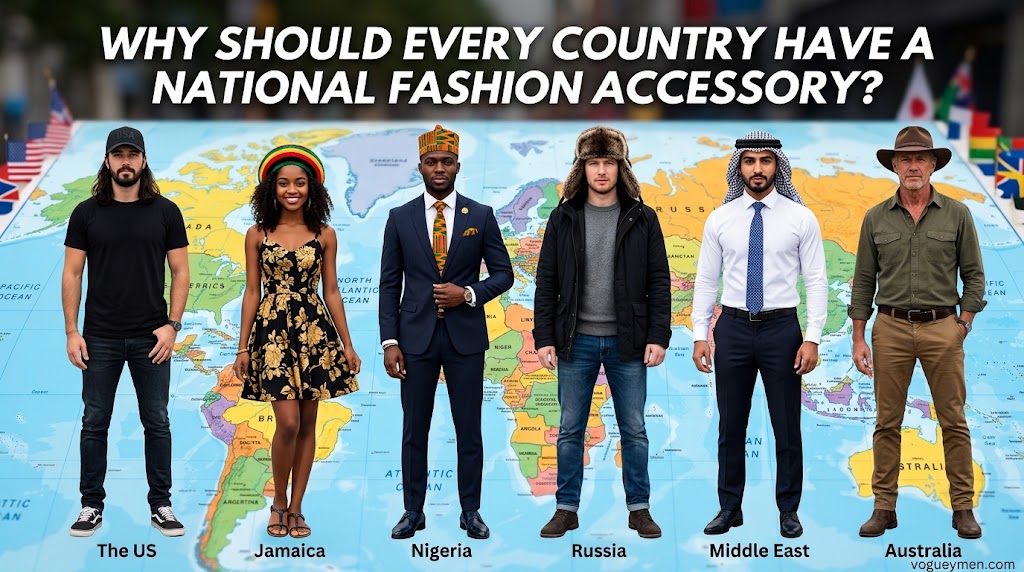
Nations proudly celebrate their national dresses, flowers, poets, animals, birds, trees—even insects. So why not a national fashion accessory? Isn’t that a missing piece in the cultural identity of so many countries?
Whenever we talk about a nation’s sartorial heritage, the conversation almost always begins and ends with its national dress. Yet most national dresses, if not all, are often ceremonial, formal, expensive, or reserved for special occasions. Fashion accessories, on the other hand, are the pieces people wear, carry, and pass down through generations. A hat, scarf, necklace, bracelet, bag, or tie can sometimes tell a nation’s story just as powerfully as an entire outfit.
We believe it is time to change that. Every nation should recognize a National Fashion Accessory—a unique, living symbol of its fashion heritage, craftsmanship, and cultural identity. It should be a heritage piece that is a living part of the country’s couture and culture. Whether it is a hat, scarf, piece of jewelry, or another iconic accessory, it deserves to stand alongside the country’s other national symbols.
In this manifesto, we will explain why national dresses alone do not tell the whole story, present five reasons every nation should have a national fashion accessory, and explore the qualities an accessory should possess to earn that honor.
The Problem with National Dresses.
Let’s be clear—we’re not arguing against national dresses. They are powerful symbols of a nation’s culture, history, and sartorial heritage. But they don’t tell the whole story.
For starters, not every country has an officially recognized national dress. Even where one exists, there’s often a practicality gap. Many national costumes are ceremonial, too elaborate, expensive, or simply not suited to the pace of 21st-century life. As globalization and changing lifestyles reshape the way people dress, these garments are increasingly reserved for festivals, weddings, and national celebrations, while everyday wardrobes become more universal.
There’s another problem. National dresses often dominate conversations about a country’s fashion heritage, leaving little room for the accessories that have quietly shaped its identity for centuries. We call this the spotlight fallacy—the tendency to let the national dress monopolize the discussion while traditional hats, scarves, jewelry, bags, and other accessories remain in the wings.
In some cases, an accessory is even more recognizable than the national dress itself. Indonesia’s national dress, for example, lacks a widely recognized name internationally, yet the Songkok is instantly familiar across much of the world. Likewise, France’s iconic Toi et Moi ring has become a globally recognized piece of jewelry in its own right. These accessories deserve a place in the conversation, not just a footnote.
Rather than allowing these remarkable pieces of craftsmanship to fade into museum displays or obscure niche cultural circles, nations should formally recognize National Fashion Accessories—living symbols of heritage that people can proudly wear in everyday life, or rock them more often if not every day. Because culture is at its strongest when it isn’t locked behind glass, but woven into the lives of ordinary people.
Five Reasons Every Nation Should Have a National Fashion Accessory
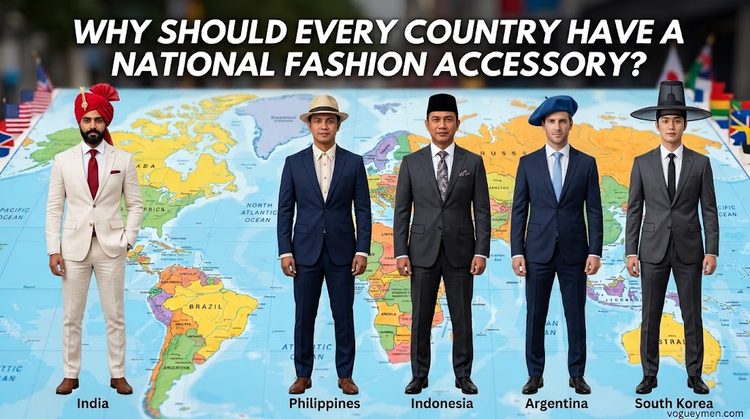
So, we’ve made our case. Now it’s time to back it up. Here are five compelling reasons why every nation should designate a National Fashion Accessory—a heritage piece to own, celebrate, and proudly wear as a symbol of its sartorial identity.
1. A National Symbol People Can Actually Wear
National dresses are among a country’s greatest cultural treasures, but they are often ceremonial, formal, expensive, or simply impractical for everyday life. Many are reserved for weddings, festivals, state occasions, or cultural celebrations. Fashion accessories don’t face that problem. A hat, scarf, ring, necklace, bracelet, or tie can be effortlessly paired with modern clothing, whether it’s business attire, casual wear, or even street fashion. They don’t ask people to choose between tradition and convenience—they allow them to enjoy both. That’s what makes a National Fashion Accessory such a powerful symbol. It is easy to wear, easy to promote, and easy to recognize. Instead of existing only in museums or appearing a few times a year at cultural festivals, it becomes a living part of everyday fashion.
2. It Gives Traditional Crafts the Recognition They Deserve
Behind every beautifully woven scarf, handcrafted hat, silver ring, or leather bag is an artisan keeping centuries-old skills alive. Unfortunately, fast fashion has a habit of flattening these traditions into a sea of mass-produced sameness.
Recognizing a National Fashion Accessory would shine a spotlight on local weavers, milliners, silversmiths, leatherworkers, bead artists, and countless other craftspeople. More recognition means more demand, more livelihoods, and a better chance that these remarkable skills survive for future generations. Heritage deserves more than applause—it deserves customers.
3. It Lets People Wear Their Heritage Every Day
Let’s be honest: wearing a full ceremonial outfit to the office might raise a few eyebrows (and possibly a few questions from HR). A fashion accessory, however, is subtle, practical, and effortlessly stylish.
Whether it’s a traditional hat, a locally crafted bracelet, or a distinctive scarf, an accessory allows people to carry a small piece of their culture wherever they go. It’s a quiet expression of national pride that fits just as comfortably in a boardroom as it does at a family gathering.
4. It Becomes a Cultural Ambassador
Most tourists admire traditional clothing, but very few pack an entire ceremonial outfit into their suitcase. A beautifully crafted hat, scarf, necklace, or ring, on the other hand, is something they can actually wear once they get home.
That makes fashion accessories ideal cultural ambassadors. They travel across borders with ease, spark conversations, support local artisans, and introduce a country’s traditions to the world—one well-dressed traveler at a time. Sometimes the smallest souvenir carries the biggest story.
5. It’s Inclusive, Adaptable, and Built for the Future
Traditional garments are deeply meaningful, but they can sometimes be tied to specific genders, regions, communities, or ceremonial occasions. Fashion accessories are naturally more flexible.
Many are unisex, easy to wear, and simple to adapt to modern styles without losing their cultural identity. Better still, countries could recognize accessories on a rotational basis, celebrating different regional traditions every few years. That way, no single craft or community has to monopolize the spotlight—and everyone gets a chance to shine.
A National Fashion Accessory shouldn’t be a relic of the past. It should be a living symbol that evolves with the nation while staying proudly rooted in its heritage.
What Qualifies as a National Fashion Accessory?
Not every hat, necklace, or scarf deserves to become a nation’s fashion symbol. In our view, a proposed National Fashion Accessory should meet most—if not all—of the following criteria.
1. It Should Have Deep Cultural Roots
This one is non-negotiable. A National Fashion Accessory should have deep sartorial roots within the country. It should have been created, developed, or significantly shaped there, and be closely connected to the nation’s history, traditions, or cultural identity. A borrowed trend, no matter how popular, cannot become a true national symbol.
2. It Should Be a Living Part of the Culture
A national symbol shouldn’t spend its life behind museum glass. Ideally, the accessory should still be worn, appreciated, or recognized by ordinary people today. It isn’t enough that it was once worn by a famous king, president, or cultural icon—it should remain a living part of the country’s fashion heritage rather than a forgotten relic.
3. It Should Be Inclusive and Unisex
A national symbol should bring people together, not represent only one gender, community, or social group. Ideally, a National Fashion Accessory should be unisex and accessible to all citizens. That said, a regional accessory can certainly earn national recognition if it has become a widely recognized and cherished part of the country’s cultural identity.
4. It Should Showcase Native Craftsmanship
A National Fashion Accessory should celebrate the skills that make a country’s fashion heritage unique. Whether it represents weaving, embroidery, millinery, leatherwork, metalwork, beadwork, or another traditional craft, it should tell the story of local artisans. Even accessories created by homegrown brands can qualify if they have become enduring national icons. Australia’s Akubra hat is a perfect example—it’s unmistakably Australian in both origin and identity.
5. It Should Fit the Modern World
Finally, a National Fashion Accessory should be as relevant today as it was yesterday. It should blend naturally with contemporary fashion, whether worn at home or abroad. Heritage shouldn’t feel like a costume reserved for special occasions—it should be something people are proud to wear in everyday life. The best national accessories don’t just preserve history; they carry it confidently into the future.
The Final Word: Every Nation Deserves a Wearable Symbol
Flags represent nations visually. National anthems represent them emotionally. National dresses represent them traditionally. National Fashion Accessories could represent them sartorially—in a way that is iconic, practical, and effortlessly woven into modern life.
A National Fashion Accessory isn’t just another symbol. It’s a living piece of heritage that people can wear with pride, pair with a modern wardrobe, and carry across borders for generations to come.
So, open your wardrobe and take a closer look. What piece of your country’s textile, jewelry, leatherworking, or hat-making heritage deserves to become its National Fashion Accessory? We’d love to hear your nomination—share it in the comments and let’s start a global conversation about the fashion symbols every nation deserves.