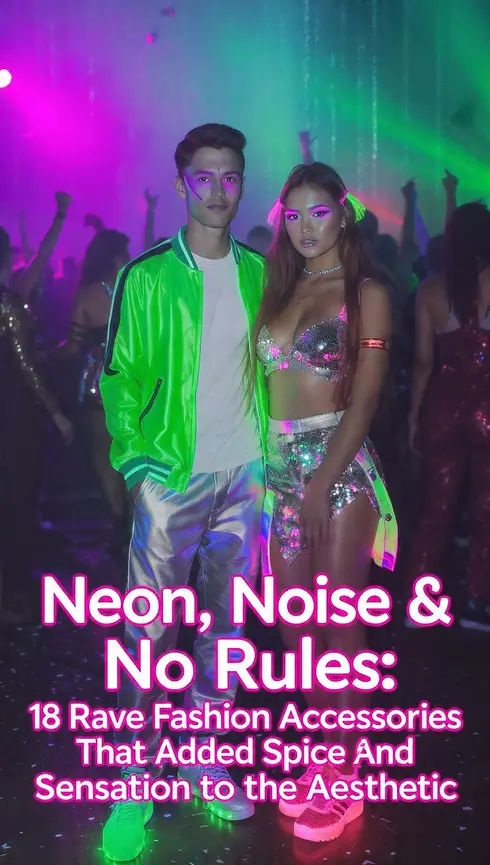
Before the bass drops and the strobes hit, let’s talk rave drip. We’re diving headfirst—no brakes, no chill—into the wild world of rave fashion accessories that have defined the scene since the early ’90s. This wasn’t just about dancing till sunrise; it was a whole lifestyle. Raving meant living loud, dressing louder, and glowing like a human highlighter. Neon everywhere, skin out, vibes feral, energy unmatched. Think bold, vibrant, expressive, and absolutely zero bars held. It’s not just raw—it’s ravaging. Sensual, sweaty, euphoric, and extra in the best way possible. From glow-fueled chaos to iconic statement pieces, here are the 18 rave fashion accessories that have forever owned the hearts of true, ride-or-die ravers.
Iridescent, Holographic & Reflective Outerwear
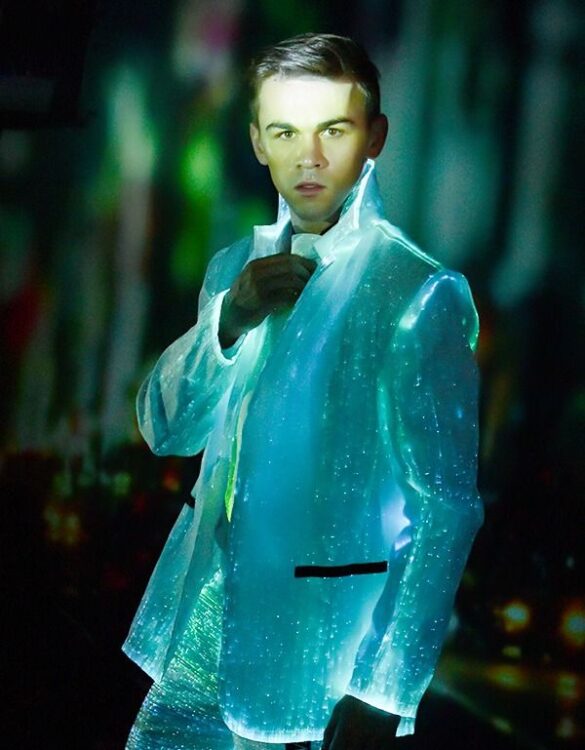
This is rave armor—built to glow, flash, and flex under lasers. Iridescent and holographic outerwear includes vests, shrugs, bombers, puffers, hoodies, and even sheer tops made from PVC, vinyl, mylar, and reflective tech fabrics that shift color with every move. Some pieces were fully transparent holographic jackets or raincoats, others went full extra with LED-lit fur coats and light-up panels. Worn open, cropped, oversized, or barely there, this outerwear wasn’t about warmth—it was about impact. Aesthetically futuristic, cyber, and borderline alien, these pieces turned ravers into walking visuals. In rave culture, reflective fits meant visibility, individuality, and main-character energy—because if you’re dancing till sunrise, you might as well look like the light itself.
Whistle Chains
The whistle chain was pure rave chaos in accessory form. Usually a plastic or metal whistle strung on a chunky bead chain, lanyard, or cord, it hung proudly around the neck like a badge of sonic rebellion. Worn by ravers and DJs, whistles weren’t about melody—they were about energy. A sharp blow during a beat drop or buildup sent crowds into collective madness. Annoying? Maybe. Iconic? Absolutely. Aesthetically, whistle chains screamed anarchy, DIY spirit, and no-rules fun. They symbolized participation—ravers weren’t just dancing, they were part of the soundscape, hyping the room and feeding the frenzy. Image Source

Kandi Bracelets
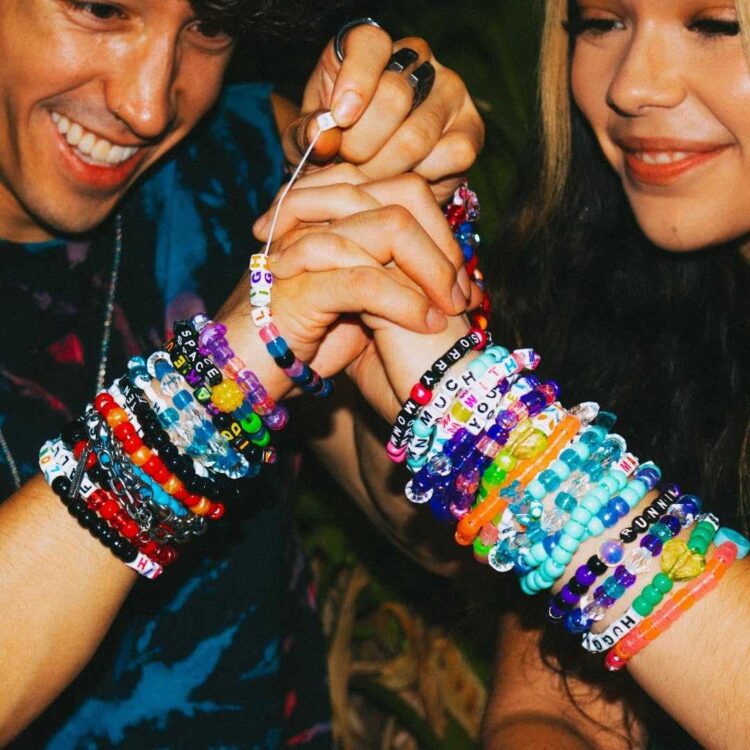
“Kandi” comes from candy—named for the bright, sugary colors of the plastic pony beads used to make these bracelets. Handmade, elastic-strung, stacked by the dozens, Kandi bracelets were traded, gifted, and flexed hard. Wearing Kandi wasn’t just fashion, it was vibe currency. Each exchange followed the sacred PLUR ritual—Peace, Love, Unity, Respect—turning accessories into emotional souvenirs. Neon beads, letter blocks, smiley faces, charms—everything screamed joy and connection. Aesthetically playful and childlike, Kandi balanced rave sensuality with wholesomeness. In rave culture, Kandi wasn’t drip—it was community you could wear.
Glow Stick Necklaces & Glow-in-the-Dark Jewelry
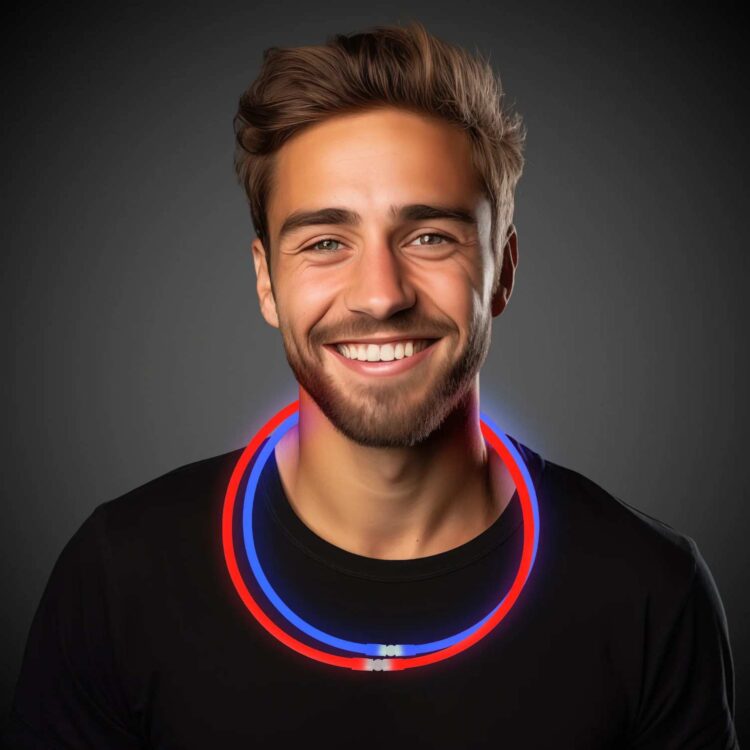
Glow sticks were the heartbeat of rave visuals. Snapped, shaken, and worn as necklaces, bracelets, anklets, or woven into hair, they turned bodies into moving light shows. Made from flexible plastic tubes filled with glowing chemicals, they reacted perfectly to dark warehouses and strobe-heavy dance floors. Beyond sticks, glow-in-the-dark rings, chokers, and pendants added that radioactive pop. Aesthetically, this was peak rave—neon, kinetic, euphoric. Glow jewelry wasn’t subtle and didn’t want to be. It celebrated motion, sweat, and visibility. In rave culture, glowing meant you were alive, present, and absolutely lost in the moment.
Kaleidoscope Goggles & Rave Diffraction Glasses
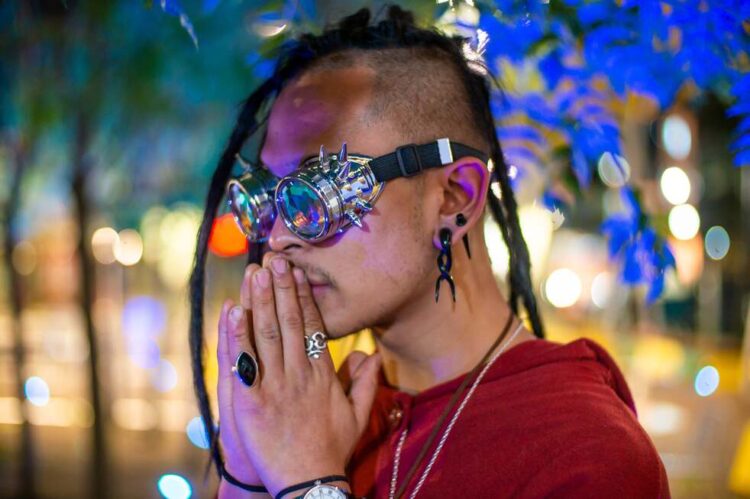
These weren’t just glasses—they were reality remixers. Kaleidoscope goggles and diffraction glasses used prismatic lenses, faceted plastic, or etched acrylic to fracture light into wild geometric patterns. Lasers turned into galaxies, LEDs multiplied, and the dance floor became a full-blown visual trip. Usually oversized, strapped on with elastic bands, or worn perched on the head, they added instant cyber-raver energy. Aesthetically surreal and futuristic, these goggles embodied rave escapism. In rave culture, they weren’t about hiding your eyes—they were about enhancing the experience, turning music into something you could almost see and touch. Image Source: Paracosmic
Wraparound Sunglasses
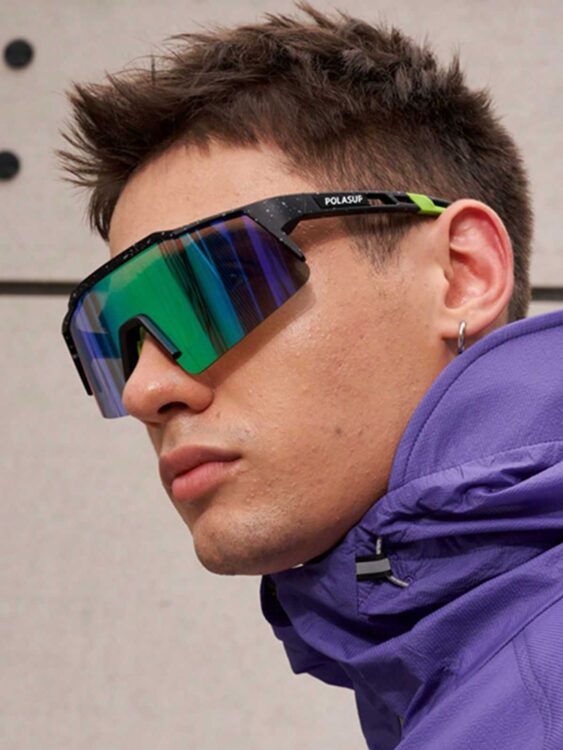
Borrowed straight from futuristic sportswear and sci-fi dreams, wraparound “bug-eye” sunglasses were sleek, curved, and aggressively cool. Made from lightweight plastic with mirrored, tinted, or chrome lenses, they hugged the face like gear from the year 2099. Worn indoors, outdoors, day or night—rules didn’t apply. Functionally, they shielded tired eyes from brutal strobes; aesthetically, they screamed speed, tech, and rebellion. In rave culture, wraparounds became a symbol of anonymity and endurance—proof you were locked in, riding the beat, and absolutely unbothered.
Rave Visors
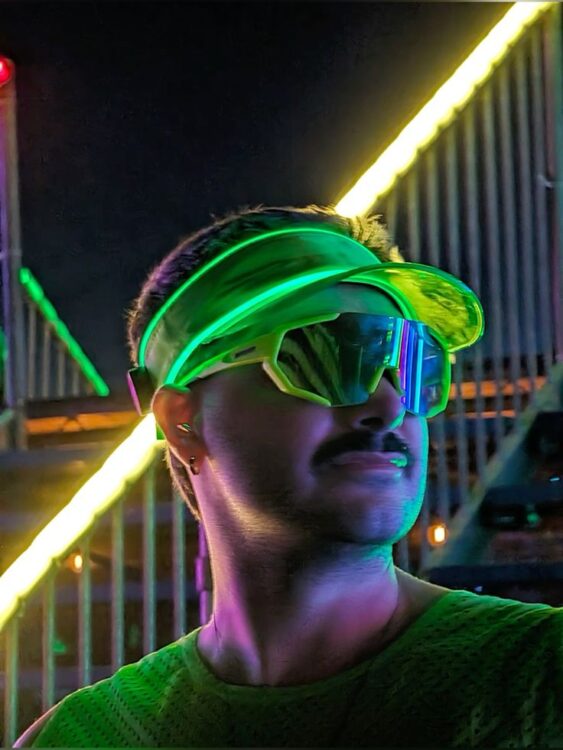
Rave visors were pure chaos styling—and that was the point. Typically made from clear, neon, holographic, or tinted plastic, these curved shields sat low over the eyes or were flipped backwards, sideways, or upside down for extra visual drama. Worn with shaved heads, space buns, or under goggles, they caught and reflected strobe lights like crazy. Aesthetically playful yet futuristic, visors blurred the line between sports gear and sci-fi costume. In rave culture, they represented experimentation—no rules, no “right” way, just vibes and personal expression on full blast.
Pacifier Necklaces
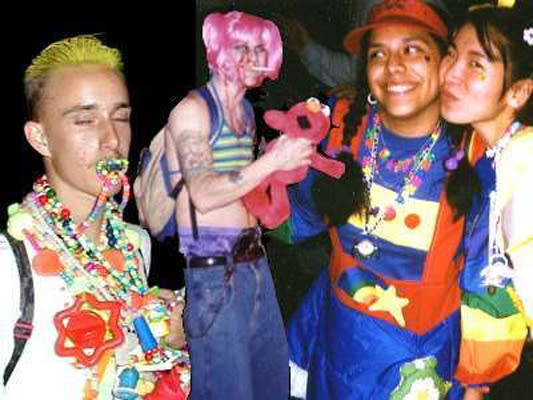
Pacifiers were small, plastic, and deeply symbolic. Usually clipped to beaded necklaces or chains, they became a controversial but unmistakable accessory of 90s rave culture. Beyond practical use, pacifiers tapped into the scene’s “second childhood” energy—innocent, euphoric, and free from adult expectations. Bright colors, glow-in-the-dark plastic, and oversized designs added to their visual impact. Aesthetically jarring yet playful, pacifiers challenged norms and embraced regression as rebellion. In rave culture, they symbolized comfort, vulnerability, and the unapologetic rejection of mainstream judgment. Image Source
Rave Festival Hats (Bucket Hats, Fedoras, Dad caps)
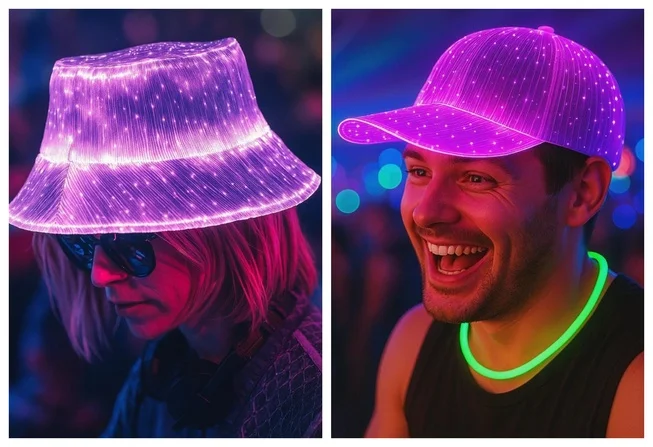
Lightweight, floppy, and endlessly customizable, rave hats were a staple for both function and flex. Made from nylon, vinyl, mesh, or reflective fabrics, they came splashed in neon colors, trippy prints, smiley faces, and logos. Easy to pack, easy to dance in, and perfect for sweaty all-nighters, they became part of the rave uniform. Worn low over the eyes or tipped back mid-set, bucket hats added effortless cool. In rave culture, they represented laid-back unity—no ego, no hierarchy, just shared rhythm under one beat.
Rave Pashmina (Pashmina Scarf)
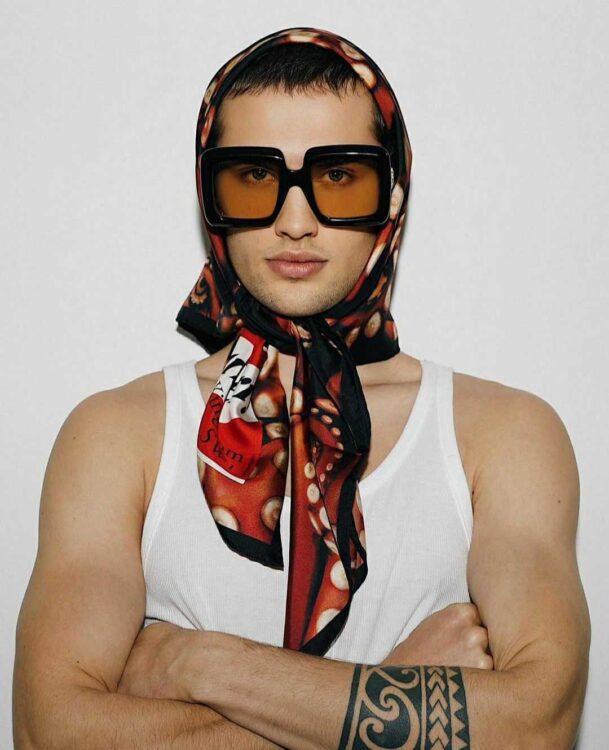
The rave pashmina is comfort, style, and vibe control all in one flowy piece. Usually made from soft woven fabric, lightweight cotton blends, or acrylic, these long scarves were draped over shoulders, wrapped around the neck, tied at the waist, or even used as head coverings mid-set. Trippy prints, mandalas, ombré dyes, and cosmic patterns gave them that spiritual-meets-psychedelic aesthetic. Beyond looks, pashminas offered warmth during sunrise chill-outs and a sense of personal space in packed crowds. In rave culture, the pashmina became a grounding accessory—calm energy, soft visuals, and safe vibes in a high-intensity world.
Rave Hoods
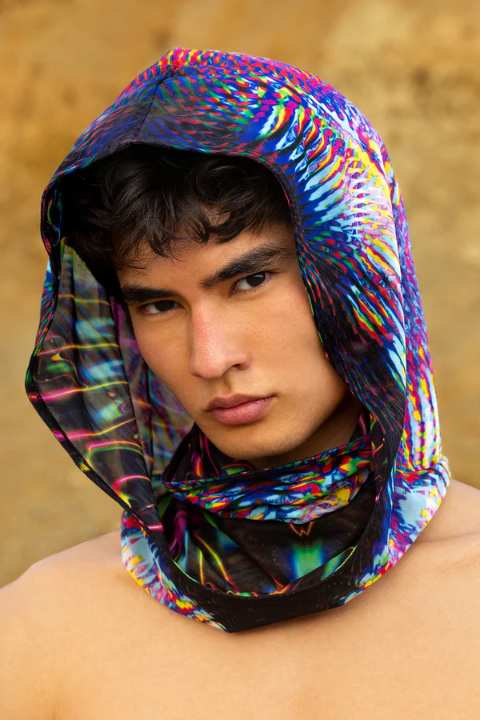
Rave hoods took anonymity and mystique to the next level. Often built into jackets or worn as standalone pieces, they were crafted from fleece, mesh, neoprene, or reflective fabrics. Some zipped over the face, others draped dramatically, creating a shadowy, cyber-nomad silhouette. Worn up during heavy drops or pulled back when catching air, rave hoods balanced utility with dark, futuristic aesthetics. In rave culture, they symbolized transformation—slipping into an alter ego, disconnecting from the outside world, and fully becoming part of the sound, the lights, and the moment.
Clack Fans
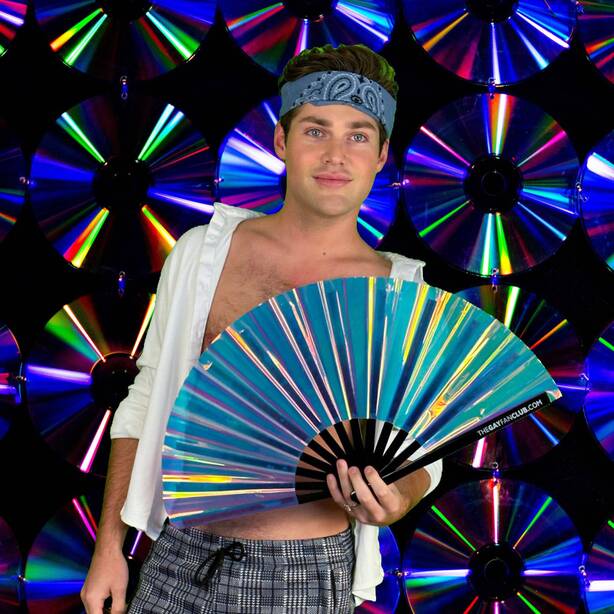
Clack fans were loud, dramatic, and unapologetically extra. Inspired by the traditional Japanese Sensu folding fan, rave versions were oversized, made from bamboo frames with fabric or vinyl panels printed with bold phrases, flames, or hypnotic patterns. The iconic clack—snapping the fan open on beat drops—became a performance in itself. Worn in hand or clipped to belts, fans added flair, airflow, and pure attitude. In rave culture, clack fans were about presence—commanding space, playing with rhythm, and turning personal movement into a crowd-hyping moment. Image Source: Bespattered Facade
LED Flashing Gloves
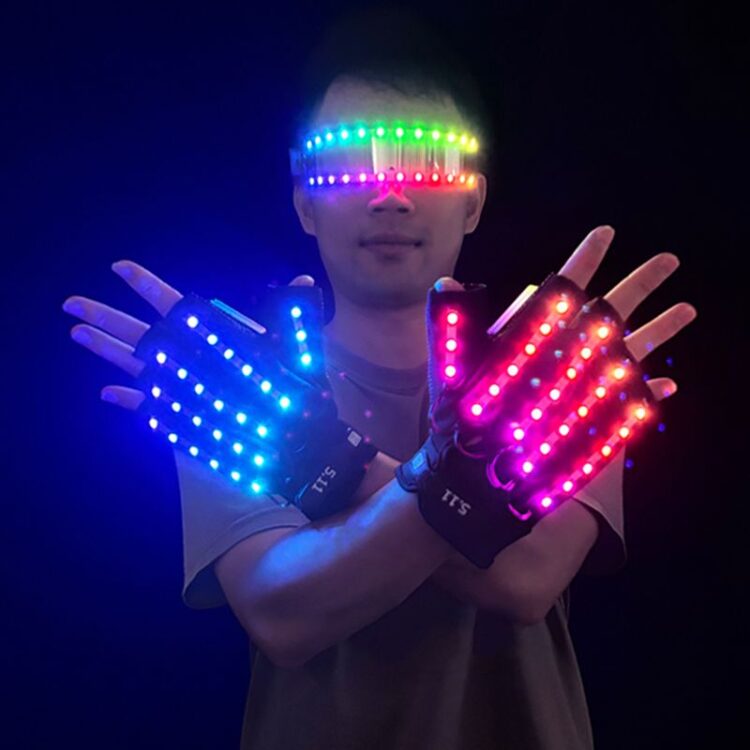
LED gloves turned hands into instruments of light. Fitted with tiny programmable LED bulbs sewn into fabric gloves or finger caps, they created trails, pulses, and color shifts synced to movement. Performers and ravers used intricate hand motions—known as “gloving”—to paint visuals in mid-air. Materials ranged from stretchy cotton to breathable mesh, designed for dexterity and comfort. Aesthetically futuristic and hypnotic, LED gloves embodied rave’s fusion of tech and art. In rave culture, they transformed spectators into participants—no stage required, just light, motion, and shared amazement.
Rave Hydration Bag
The hydration bag was rave survival gear disguised as fashion. Typically a lightweight backpack with a built-in water reservoir and tube, it was made from nylon, mesh, or reflective materials. Covered in patches, LEDs, pins, or kandi, it became an extension of personal style. Worn tight to the back for hands-free dancing, it kept ravers hydrated through marathon sets. In rave culture, hydration bags symbolized care and endurance—looking out for yourself and your crew while staying locked into the music from dusk till dawn.

Rave Masks
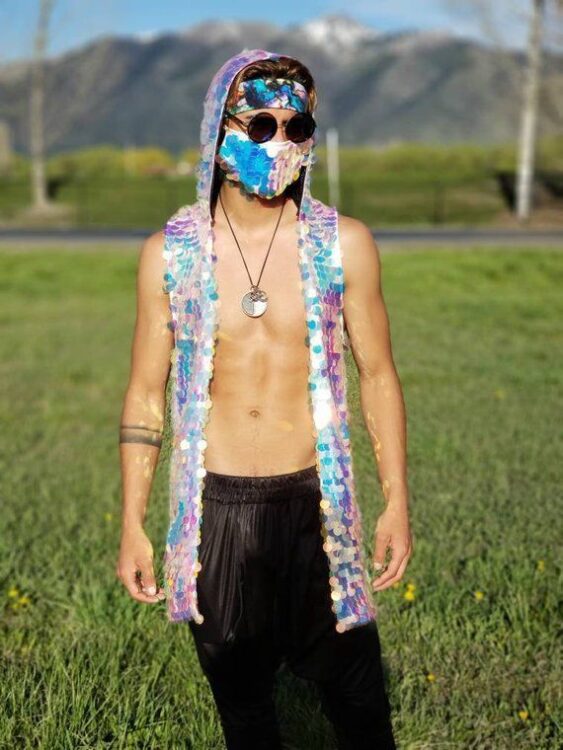
Rave masks blurred identity and turned the dance floor into a living sci-fi scene. Made from mesh, neoprene, LED panels, PVC, or reflective fabrics, these masks ranged from simple face covers to full cyberpunk rigs with glowing patterns and animated lights. Worn over the mouth, nose, or entire face, they added mystery while syncing perfectly with strobes and bass drops. Aesthetically futuristic, dystopian, and slightly feral, rave masks allowed ravers to disappear into the crowd—or stand out hard. In rave culture, masks symbolized freedom through anonymity: no names, no labels, just movement, music, and pure vibe.
Rave Chaps
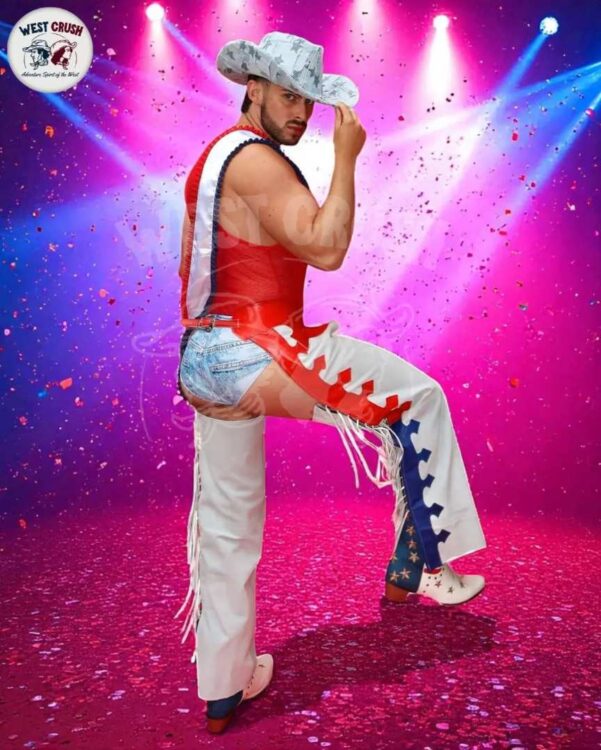
Rave chaps are pure main-character energy. Strapped, cut, and unapologetically bold, they frame the legs and hips instead of hiding them, turning movement into the statement. Made from vinyl, PVC, mesh, faux leather, holographic fabrics, or stretch straps, they’re designed to be worn over shorts, bodysuits, swimwear, or bare skin. They don’t cover; they highlight. Every step, spin, and drop becomes more dramatic. Aesthetically, rave chaps sit at the intersection of cyber, fetish, and festival freedom. They scream confidence, body-positivity, and “my body, my rules.” In rave culture, chaps represent fearless expression—sensual without apology, rebellious without explanation, and powerful without needing permission.
Fluffies
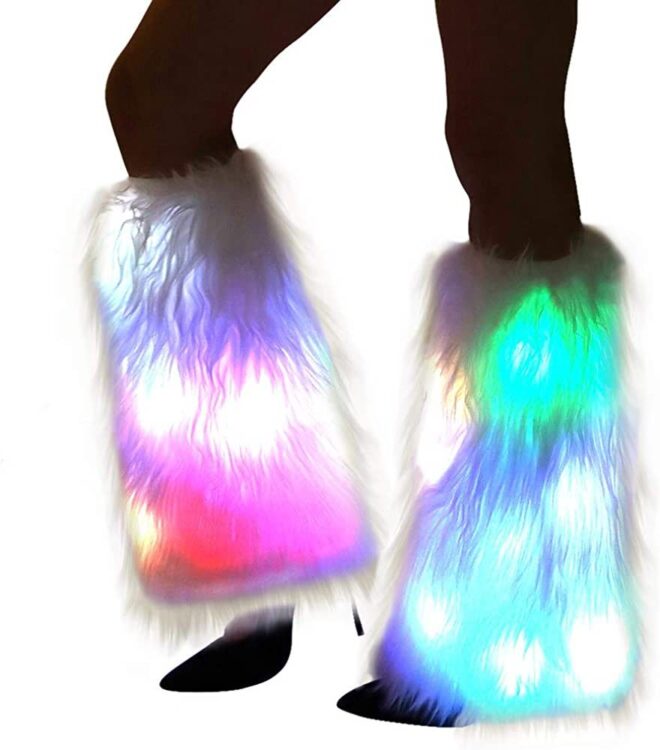
Fluffies were unapologetically loud, soft, and iconic. These were furry leg warmers—usually neon, pastel, or glow-reactive—worn over sneakers or boots, often reaching the knees. Made from faux fur or shaggy synthetic fibers, fluffies bounced with every step, turning dancing into a visual performance. Aesthetically playful and cartoonish, they added exaggerated movement and color to rave fits. In rave culture, fluffies represented joy without irony—childlike, expressive, and fearless. They weren’t about practicality; they were about fun, proving that rave fashion didn’t take itself seriously, and that was the whole point.
Light-Up Shoes
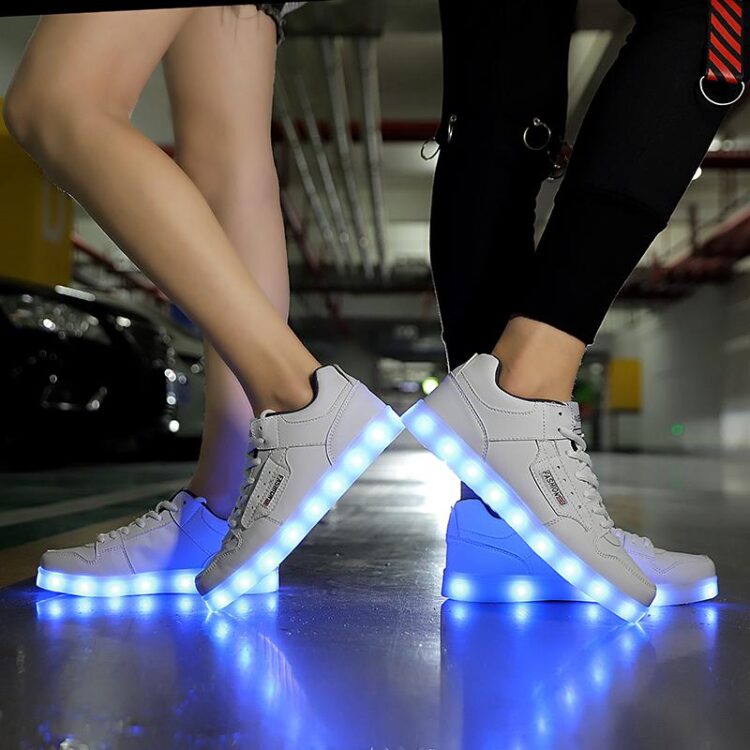
Light-up shoes were pure rave magic at ground level. Built with LED soles, fiber-optic panels, or glow-in-the-dark rubber, these sneakers pulsed, flashed, or stayed neon-bright with every step. Usually made from synthetic leather, mesh, and translucent plastics, they turned footwork into a light show. Worn proudly on dark dance floors, they amplified movement and visibility. In rave culture, light-up shoes were more than footwear—they were kinetic accessories. Each step became part of the spectacle, reminding everyone that at a rave, even walking is a performance.
And that’s the rave accessory rundown—pure glow, chaos, and heart that made rave fashion loud, luminous, and unforgettable. From glow-soaked chaos to soft comfort pieces, every item carried a mood, a memory, and a moment. Now we wanna hear from you. Which accessory did you vibe with the hardest—and what did it mean to you on the dance floor? Was it about style, freedom, connection, or pure madness? Drop your thoughts in the comments and let’s keep the rave energy alive.